


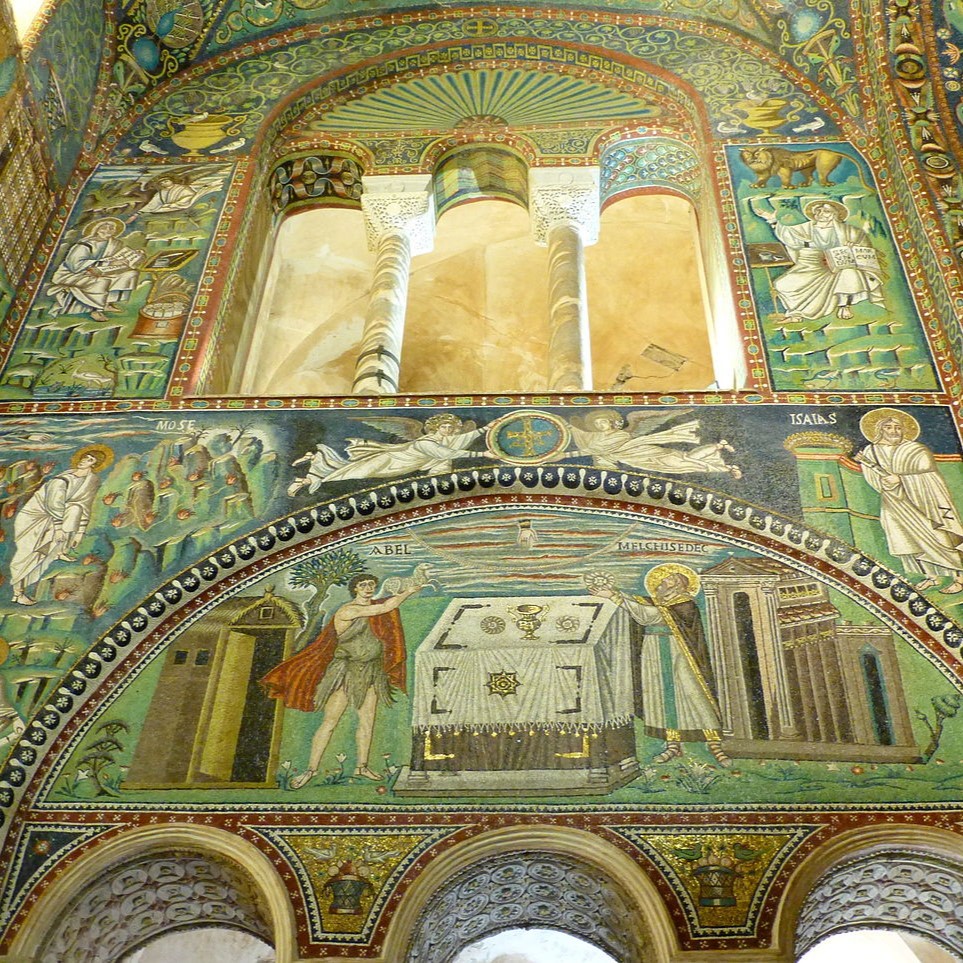
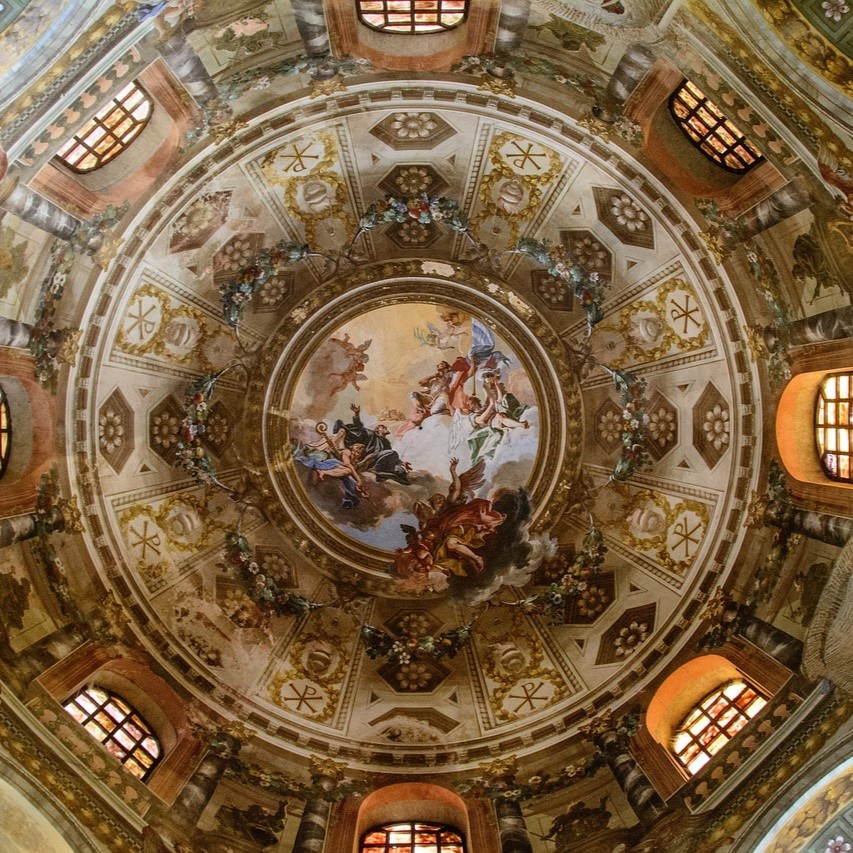
The Basilica of St. Vitale is, without a doubt, the most emblematic and fascinating monument in Ravenna. From the very entrance, visitors are enveloped by a sense of awe at the perfect harmony between voids and solids that characterizes the architectural structure. The elegant and meticulously calibrated geometries create a space that seems to defy time, while the elaborate chiseling of certain architectural details reveals the craftsmanship of the artisans who created them. However, what strikes the most, and leaves an indelible mark on the memory of anyone who enters, are the mosaics, whose colors, light, and symbolism envelop the viewer.
Today, the mosaics of Ravenna are recognized as one of the most extraordinary artistic wonders of the late ancient world, but it has not always been so. It is hard to imagine that, between the 17th and 18th centuries, these works went almost unnoticed by travelers. What captured attention at that time were the precious oriental marbles, the sarcophagi from the early Christian era, and the carefully carved inscriptions, not to mention the 16th-century paintings that adorned many of the sacred buildings. The mosaics, now famous, were often overlooked, probably due to the aesthetic preferences of the time, which favored art forms closer to Renaissance classicism, but also due to the deterioration of many mosaic sections, whose splendor had been dimmed by time.
It was only starting from the late 18th century that Ravenna’s mosaics began to attract renewed interest. This change in sensitivity is partly due to the first restoration efforts, but also to a new aesthetic vision, more attuned to the symbolic and spiritual value of art. A particularly emblematic testimony comes from the French writer Louise Colet, companion of the famous Gustave Flaubert, who in 1862 grasped the true essence of these mosaics, describing them as “a revelation of the inner world.” With keen insight, Colet recognized in Ravenna’s mosaics “the treasure of the soul, the Christian golden fleece, the dream,” an expression of a deep spirituality that transcends mere decorative value.
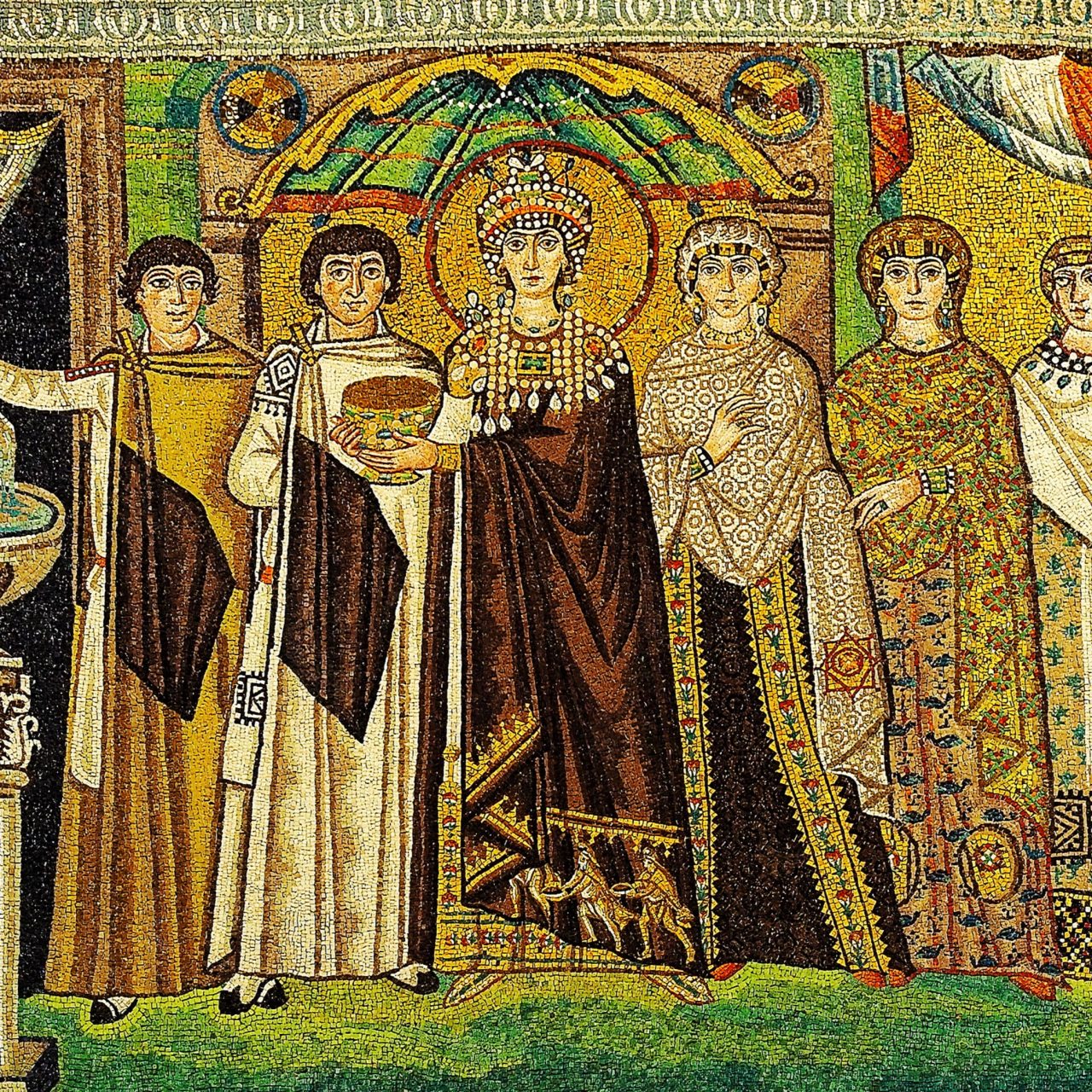
Especially significant are the mosaics of the Basilica of St. Vitale, where the sacredness of the art manifests in all its power. Here, behind the solemn and almost enigmatic faces of Empress Theodora and Emperor Justinian, lies a complex network of symbols and meanings, which slowly reveals itself to the attentive viewer. The decorative patterns, enriched with exquisite details and the skillful use of gold, are not merely ornaments, but instruments through which a spiritual message of eternity and divine power is conveyed. It is in this context that one can again perceive that timeless and mystical allure, which today, as in the past, dazzles anyone who stands before this extraordinary testimony of Ravenna’s greatness and its history.
Please contact me to arrange your tour of Ravenna.