


Mosaic is one of the most ancient and fascinating art forms, capable of transforming simple surfaces into works of great complexity and beauty. The technique of mosaic has deep roots, dating back thousands of years, and has developed through various cultures and historical periods until it reached its artistic pinnacle in Ravenna, Italy. This article explores the history of mosaics, from its origins to the splendid legacy left by the city of Ravenna, considered one of the most significant centers of mosaic art.
The art of mosaic has very ancient origins. The earliest known examples date back to Mesopotamia around the 3rd millennium BCE, where small stones were used to decorate floors and walls. Later, around the 2nd millennium BCE, mosaics became more refined in Egypt and Greece, where floors were decorated with pebbles to form geometric patterns and simple scenes.
The technique developed further in the Hellenistic period (4th–2nd century BCE), when Greek artists began using smaller stone tesserae, allowing for greater detail and the creation of mythological and naturalistic scenes. With the expansion of the Roman Empire, mosaic became a popular art form throughout the Mediterranean, used to decorate villas, baths, and public buildings. Colored tesserae were set into cement to create complex and realistic designs, from portraits to hunting scenes, up to the spectacular polychrome floors that can still be admired today in Roman ruins.
With the advent of the Byzantine Empire, mosaic reached a new level of perfection and symbolic meaning. Byzantine mosaics were made with colored glass, gold, and silver tesserae that reflected light and created an effect of luminosity and sanctity. During the 5th and 6th centuries, mosaic art became one of the preferred mediums for religious representation. Christian buildings were adorned with sacred images, expressing the spirituality and power of the empire.
During this period, mosaics became a means to represent the divine, with images of Christ, the Virgin Mary, and saints adorning the walls of basilicas, transforming these spaces into celestial visions. The Byzantine technique influenced mosaic art throughout Europe and survives to this day in many masterpieces that we can still admire.
Ravenna, a city in the Emilia-Romagna region, is considered one of the world’s foremost centers for mosaic art. Thanks to its location and history, Ravenna became the capital of the Western Roman Empire in 402 CE, later coming under Byzantine influence in 540 CE under Emperor Justinian. It was during this period that Ravenna experienced an exceptional artistic flourishing.
Ravenna’s mosaics are celebrated for their beauty, complexity, and vividness. Created with colored glass, gold, and mother-of-pearl tesserae, Ravenna’s mosaics achieve an extraordinary luminosity and range of colors that bring life to the figures and scenes represented.
Ravenna is home to some of the world’s best-preserved and most famous Byzantine mosaics, recognized as UNESCO World Heritage Sites. Highlights include:
Basilica of San Vitale: Built in the 6th century, it is famous for its mosaics depicting Emperor Justinian and Empress Theodora with their courts. The figures appear to float in a golden space, creating an ethereal and sacred effect.
Mausoleum of Galla Placidia: This small building houses some of Ravenna’s oldest and most intense mosaics. The scenes present Christian symbols like the Good Shepherd, set against a dark blue background that highlights golden details and sacred figures.
Basilica of Sant’Apollinare Nuovo: Built for the Ostrogoth king Theodoric and later modified by the Byzantines, it is famous for its long mosaic panels depicting processions of saints and martyrs, offering an extraordinary example of iconographic continuity between Western and Byzantine art.
Basilica of Sant’Apollinare in Classe: Located just outside the city, this is one of the best-preserved early Christian buildings, with a magnificent mosaic in the apse depicting Saint Apollinaris among sheep in a landscape symbolizing paradise.
Today, Ravenna is much more than a historical city with ancient monuments; it is a vibrant and dynamic center where the art of mosaic continues to live, evolve, and inspire. The city has successfully renewed its mosaic tradition, preserving the quality and mastery of ancient techniques while embracing modern experimentation and influences. This makes Ravenna a unique destination, not only for art history enthusiasts but also for lovers of contemporary art.
Ravenna is home to some of the most prestigious mosaic schools and workshops in the world, such as the School for Mosaic Restoration and the Academy of Fine Arts of Ravenna, where new artists and restorers are trained. These institutions offer courses ranging from traditional to contemporary mosaic techniques and attract international students eager to learn mosaic art directly in the “capital of mosaic.”
The city’s workshops are open to the public, allowing visitors to observe artists’ work up close and, in some cases, to participate in intensive workshops and courses. These workshops play a dual role: preserving and passing down traditional mosaic art while exploring new stylistic and technical horizons.
Ravenna celebrates its mosaic heritage with a series of cultural events and festivals held annually. Among these stands RavennaMosaico, a biennial festival that transforms the city into an open-air museum and an international platform for contemporary mosaic. During the event, artists from around the world exhibit their works, participate in conferences and workshops, and contribute to taking mosaic beyond traditional boundaries, showing how this ancient art can dialogue with modern artistic trends.
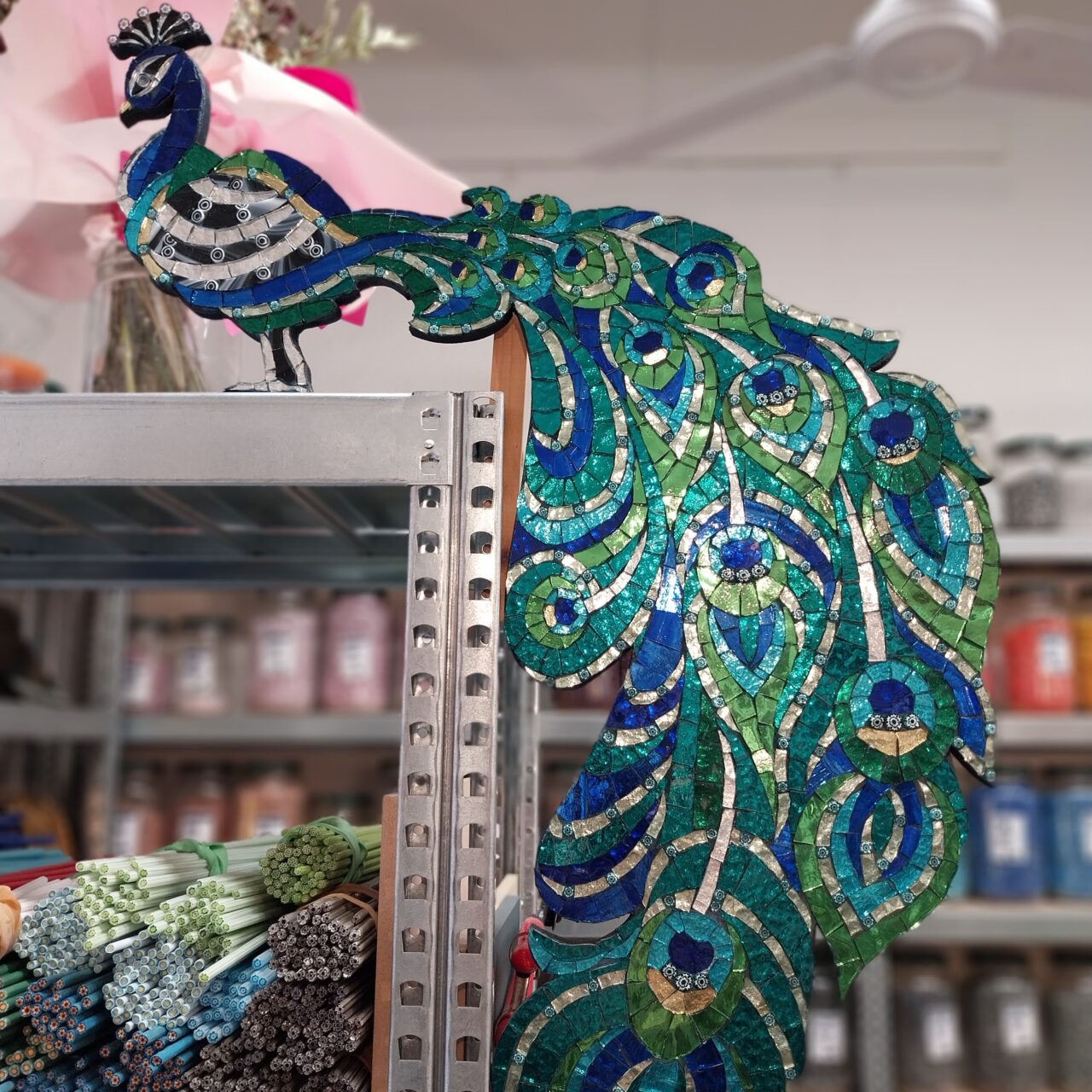
In recent decades, Ravenna has experienced a true revival of mosaic art in a contemporary key. Local and international artists have created innovative works that reinterpret mosaic tradition in new and unexpected ways, using modern materials and experimental techniques. The MAR – Museum of Art of the City of Ravenna houses a rich collection of contemporary mosaics, offering a bridge between past and present and showcasing the evolution of this art form over time.
Numerous Ravenna-based artists, like Marco De Luca and Felice Nittolo, have explored new artistic languages through mosaic, bringing the technique beyond churches and museums to public installations and works that reinterpret materials and symbols in a modern light. Ravenna has thus become an avant-garde laboratory, where mosaic is not only preserved but also innovated.
The passion for mosaic is not only a tourist attraction but is part of Ravenna’s very identity. The city is home to a vibrant and active artistic community that works with a collective approach, promoting mosaic as both a heritage to be preserved and an expressive language to be innovated.
With exhibitions, artist residencies, and international collaborations, Ravenna is building a new future for mosaic art, demonstrating that this ancient technique can continue to evolve, inspire, and engage future generations.
In conclusion, Ravenna is not only the “city of mosaics” for its glorious past but is also a living, active center where mosaic art continues to reinvent itself. Today, the city represents an extraordinary model of how an ancient tradition can evolve and find new meanings, creating a bridge between the legacy of the past and contemporary innovation.
Please contact me to arrange your tour of Ravenna.