


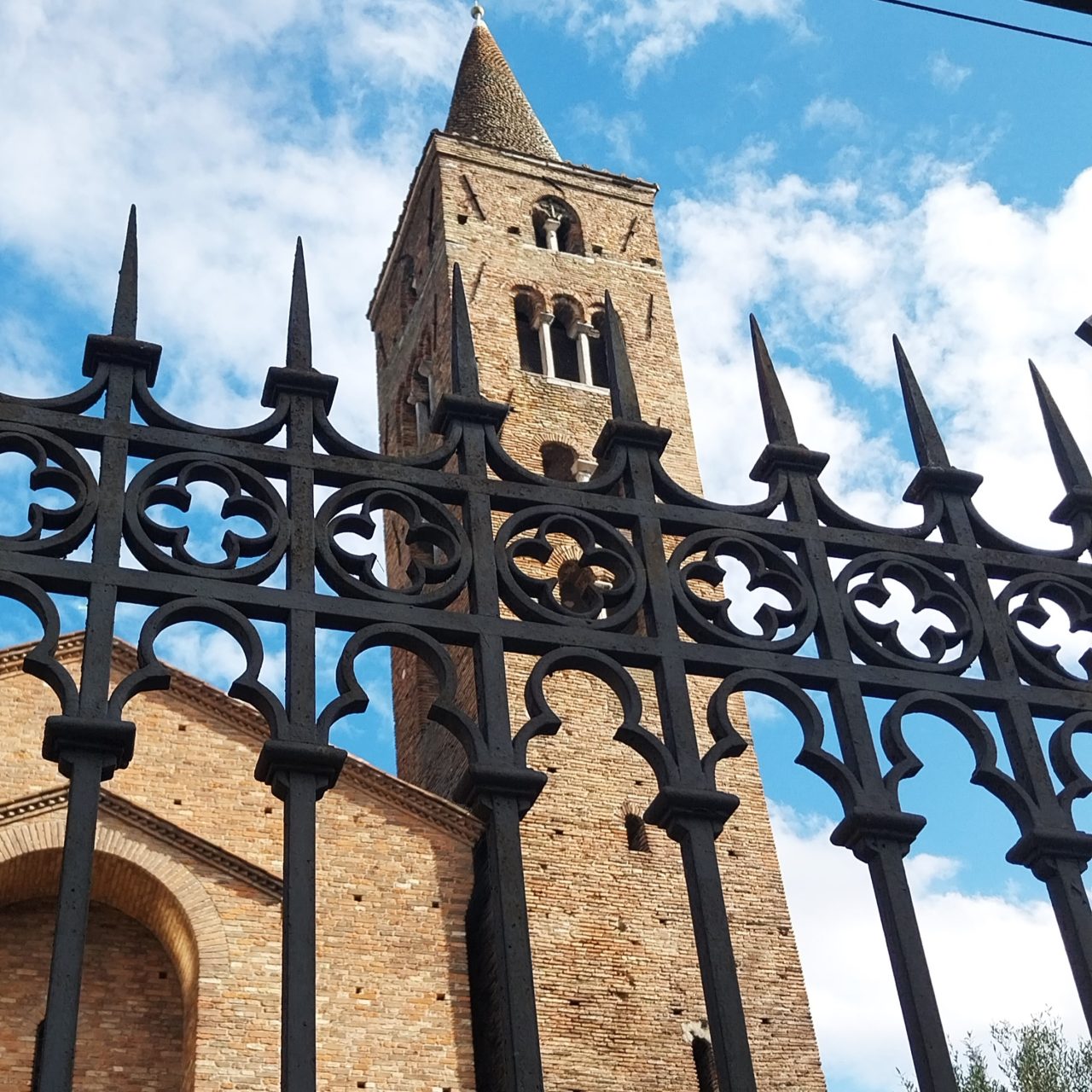
In Ravenna, just a short distance from the train station, stands the magnificent Basilica of St John the Evangelist, a jewel of early Christian architecture built in the first half of the 5th century by the will of Empress Galla Placidia. This sacred place is not only a historical monument but also a symbol of faith and devotion that has endured through the centuries, enriched by legends and invaluable works of art.
According to tradition, during a stormy sea voyage from Constantinople, the imperial fleet carrying the young Emperor Valentinian III and his mother Galla Placidia was caught in a violent tempest. Fearing for her life and that of her son, the empress vowed to build a church dedicated to St. John the Evangelist, the patron saint of sailors, if they survived the fierce storm. Miraculously spared from shipwreck, they arrived safely in Ravenna, landing at the Port Coriandro, near the city. True to her promise, Galla Placidia had the basilica erected at the landing site, as a sign of gratitude and devotion.
The original basilica of St Johh the Evangelist in Ravenna was richly adorned with splendid mosaics, unfortunately lost over the centuries, though historical sources provide testimony of their existence. The triumphal arch featured the figure of the Redeemer flanked by St. John, while scenes of the averted shipwreck were depicted on the sides. The extrados of the apse displayed images of ten emperors from the Theodosian dynasty, emphasizing the connection between imperial power and Christian faith. In the apse vault, Christ enthroned dominated the scene, surrounded by the symbols of the Evangelists and depictions of Galla Placidia’s imperial family.
A dedicatory Latin inscription adorned the mosaic decoration of the apse, marking the fulfillment of the empress’s vow:
“To the holy and most blessed apostle John the Evangelist, the august Galla Placidia, with her son the august Placido Valentiniano and her daughter the august Justa Grata Honoria, fulfill the vow for deliverance from the danger of the sea.”
Over the centuries, the basilica has undergone numerous transformations and restorations. During World War II, the building was severely damaged by bombings. Reconstruction, which began immediately after the conflict, took several years, with the aim of restoring the basilica to its former glory. During this phase, parts of the original structure were rebuilt, and the 14th-century Gothic portal was recovered.
The Gothic portal, with its elegant pointed arch, tells another fascinating story related to the foundation of the basilica. It is said that on the night before the consecration, Galla Placidia had a vision of St. John the Evangelist in incorporeal form. Struck by the apparition, the empress prostrated herself in adoration. As the image faded, one of the saint’s sandals remained in her hands, becoming a precious relic kept in the church. This mystical event is depicted in the sculptures adorning the entrance portal.
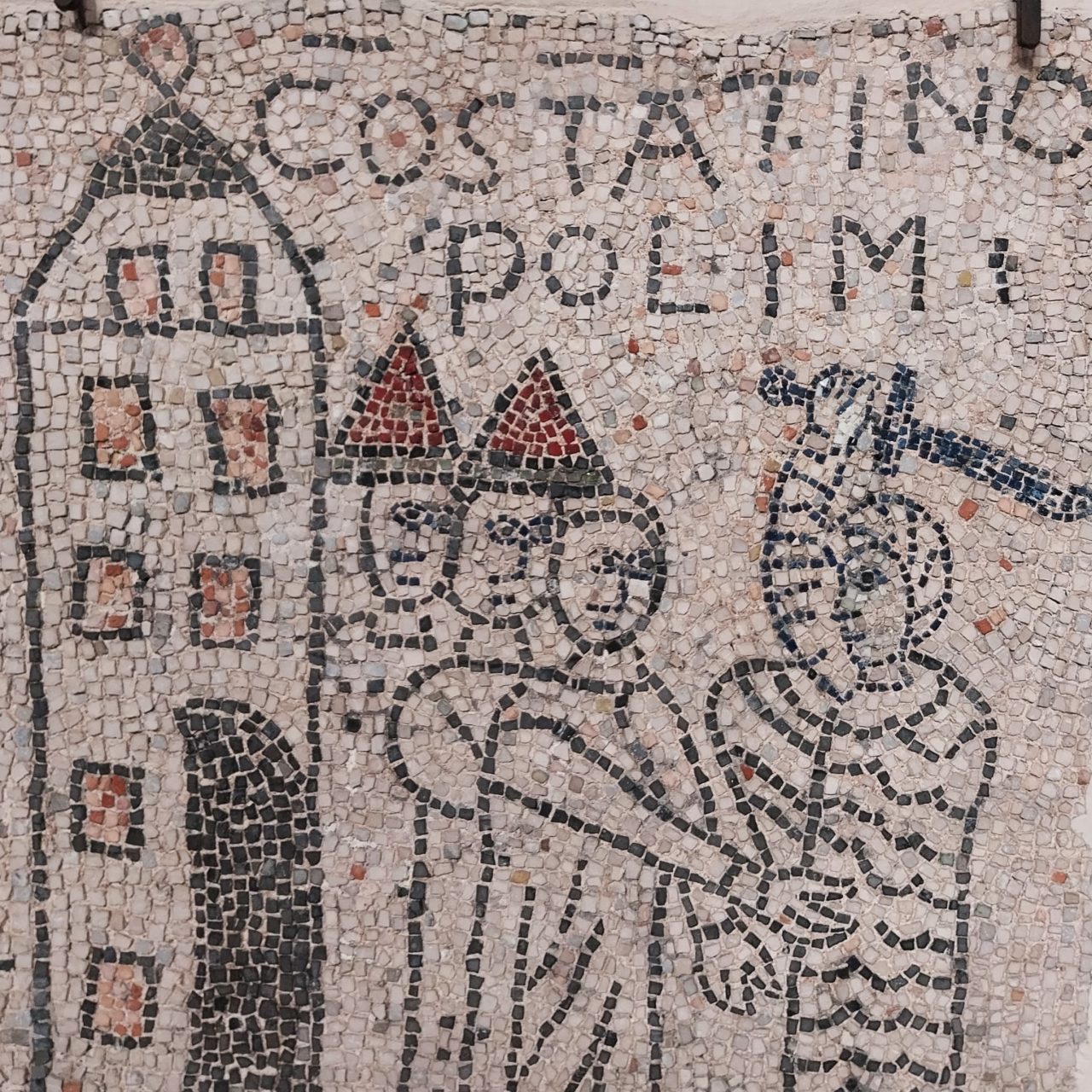
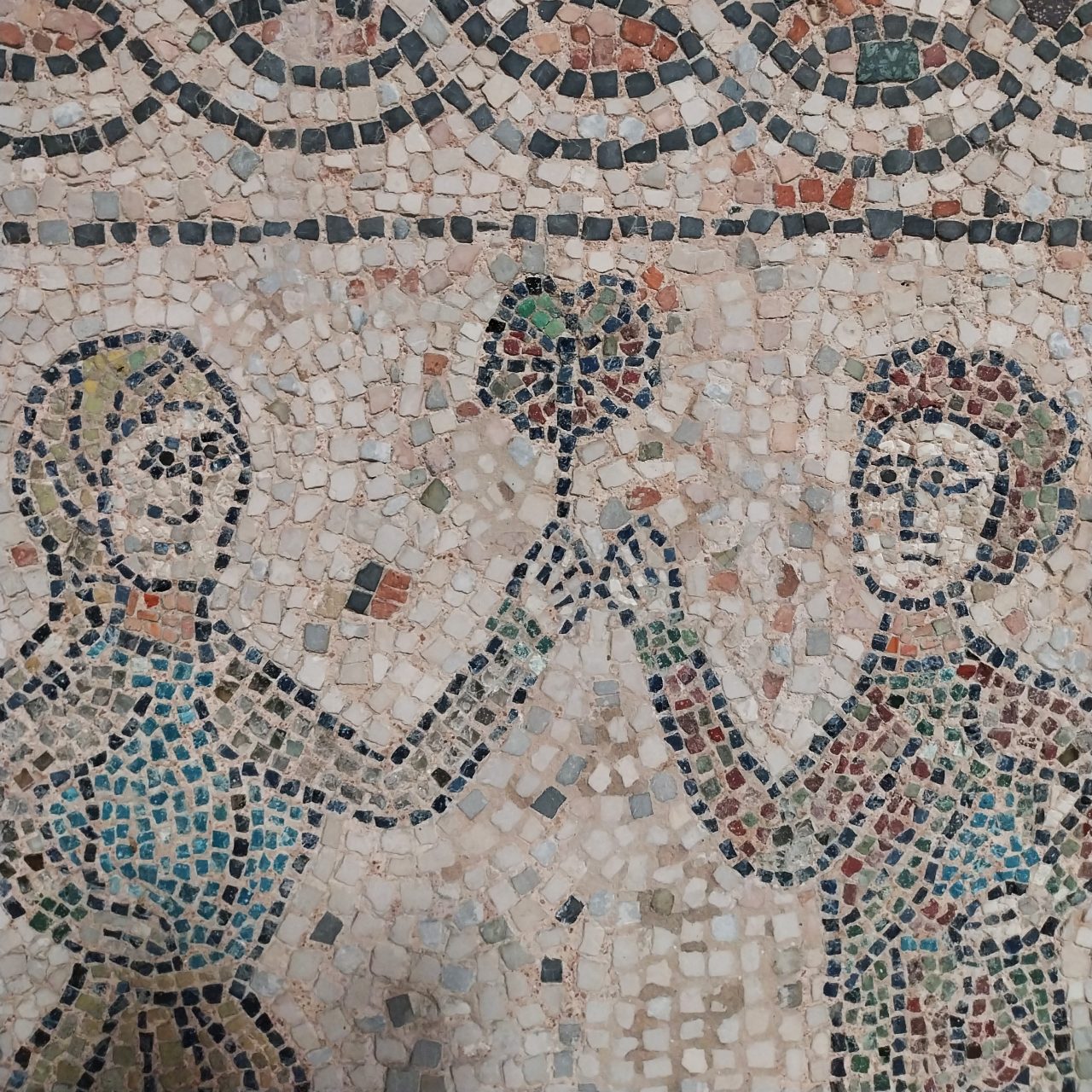
In the 18th century, during restoration work, extraordinary mosaic floors from the 13th century were uncovered, now displayed along the basilica walls. These medieval mosaics feature fascinating iconography: representations of the Fourth Crusade, scenes of courtly love, and a variety of real and fantastical animals such as the unicorn, griffin, and double-tailed mermaid. These works offer a unique glimpse into medieval culture and symbolism.
On the counter-facade of the basilica of the church of St. John the Evangelist in Ravenna, you can admire an impressive 17th-century painting by the Ferrarese artist Carlo Bononi. Originally intended for the refectory of the monastery governed by the Congregation of the Canons Regular of San Salvatore, the painting depicts the Banquet of Ahasuerus, an episode from the Book of Esther in the Old Testament. The work is striking for its dramatic intensity and masterful use of light, further enriching the artistic heritage of the church.
The Basilica of St. John the Evangelist in Ravenna is not only a place of worship but a treasure trove that preserves centuries of history, art, and faith. Every corner of the building tells a story: from the legends surrounding Empress Galla Placidia, to mosaics that bear witness to the Crusades and medieval imagination, to Renaissance and Baroque works of art.
Visiting the basilica with a guide from Ravenna allows you to embark on a journey through time, exploring the deep roots of Ravenna’s culture and early Christianity. It’s a unique opportunity to closely admire the remnants of a glorious past that continues to live through the stones and artworks housed within.
Please contact me to arrange your tour of Ravenna.