


Within the magnificent basilicas of Ravenna, it is not only the famous mosaics that capture attention and narrate the history of early Christian communities, but also many other liturgical objects and furnishings that recall ancient traditions and long-forgotten rites. Among these, the ambo holds a particularly significant role, serving as a symbolic bridge between the past and the present of Christian liturgy.
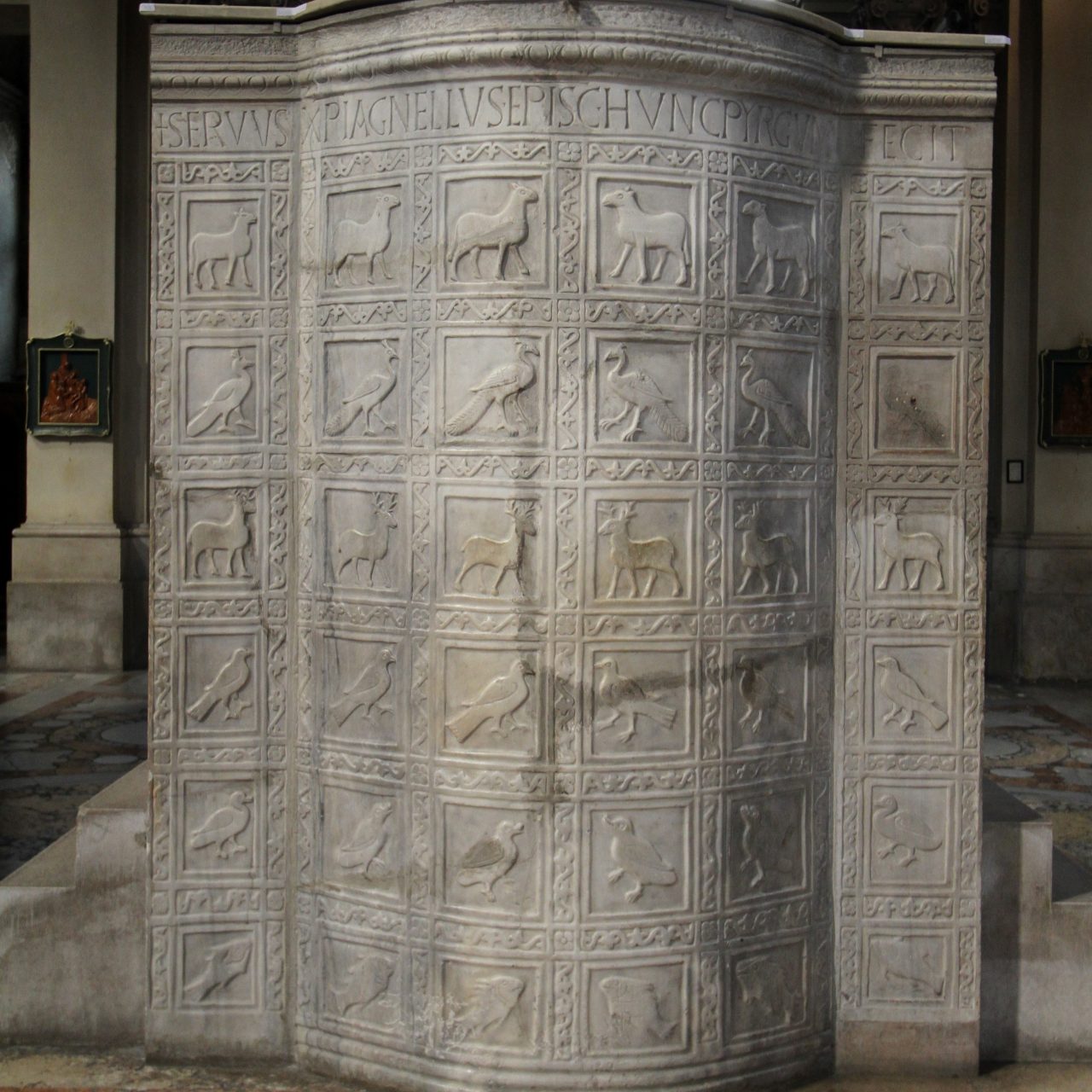
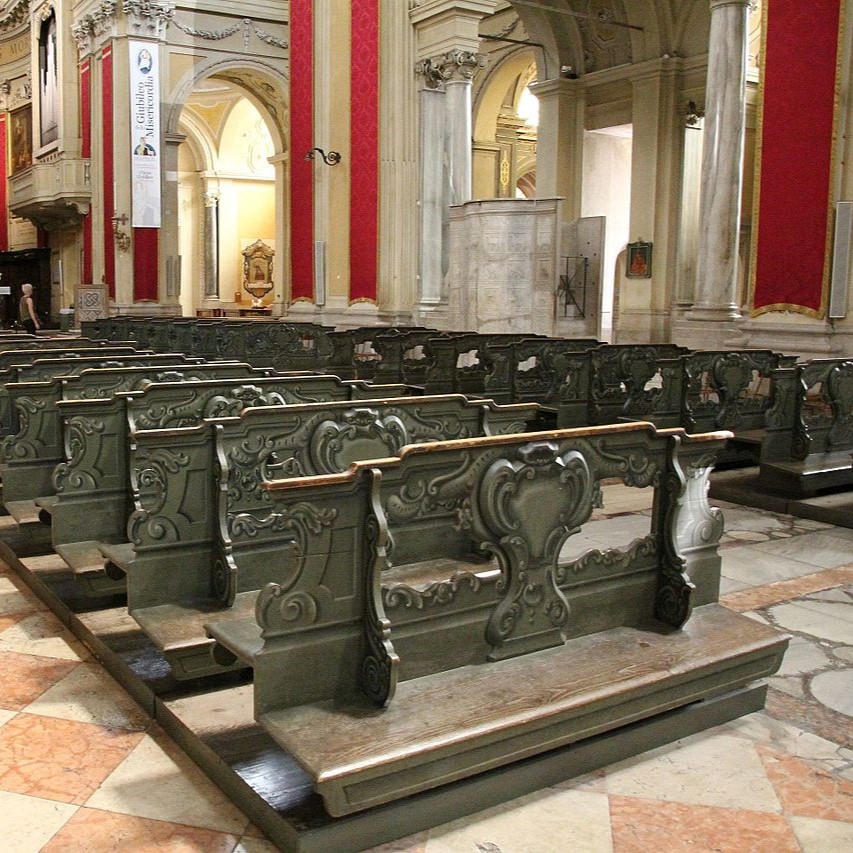
One notable example is preserved in the Cathedral of the Resurrection of Ravenna, where an ambo dating back to the second half of the 6th century is traditionally attributed to the initiative of Archbishop Agnello. This ancient artifact, crafted from fine Greek Proconnesian marble, is adorned with an intricate sculptural pattern that represents a symbolic world populated by sacred animals. Among them, lambs, peacocks, fish, doves, and ducks stand out, all elements that refer to a deep Christian symbolism, evoking themes such as purity, resurrection, and spiritual fertility.
The term “ambo” derives from the Greek verb anabaino, meaning “to ascend,” a clear reference to its elevated position, from which the Word of God was proclaimed. Often confused with the pulpit, the ambo holds a very specific liturgical and symbolic significance: it represents the empty tomb from which the angel announced the resurrection of Christ, a central event in Christian faith. This elevated place was not just a reading station but also a symbol of divine revelation and announcement.
In the early centuries of Christianity, many churches were equipped with two ambos, each with a distinct and symbolically rich function. One, located along the southern nave, was reserved for the proclamation of the Gospel. From this position, the reader, facing north, symbolically allowed the divine word to travel from light to darkness, thus illuminating the world’s obscurities with Christ’s message. The second ambo, on the other hand, was dedicated to the reading of prophetic texts and apostolic letters, which complemented the Gospel’s message with the words of the law and prophecy.
These details, which today seem like remnants of a distant past, nonetheless preserve the memory of ancient liturgical gestures and the profound spirituality that animated the early Christian communities. Every element of these sacred furnishings, from the precious materials to the refined decorations, was imbued with meaning and contributed to creating an atmosphere of sanctity, where faith was lived with extraordinary intensity. The proclamation of the Word was not a mere ritual moment but an event laden with symbolism, engaging the entire community in the celebration of the mystery of faith.
Today, contemplating the ambo of the Cathedral of Ravenna and other similar liturgical furnishings offers us the opportunity to reflect on an era where every aspect of religious life was permeated with sacredness and symbolism, allowing us to rediscover the deep connection between art, liturgy, and Christian spirituality. This artistic and spiritual heritage continues to speak to the hearts of believers and visitors alike, inviting them to immerse themselves in a dimension where beauty and faith are intertwined in an eternal dialogue.
Please contact me to arrange your tour of Ravenna.