


In 1993, near the Church of Sant’Euphemia in Ravenna, a late-antique residential complex (5th–6th century AD) was brought to light. The impact of this discovery was so significant that a meticulous excavation and conservation project was immediately launched under the supervision of the Superintendence of Cultural Heritage, aiming to safeguard what would eventually prove to be one of the most important mosaic sites in Ravenna, second only to the monuments inscribed on the UNESCO World Heritage List.
Today, the House of the Stone Carpets is incorporated into an underground museum itinerary, accessible through an entrance built next to the Church of Sant’Euphemia. Descending a few steps, visitors enter a space suspended in time, with raised walkways that allow them to observe the mosaics from above, offering a comprehensive yet close-up view. This arrangement not only ensures the protection of the mosaic floors but also provides visitors with a privileged vantage point to appreciate the designs, colors, and intricately crafted tesserae. The layout has been conceived to blend harmoniously with the subterranean environment, keeping temperature and humidity levels under control and thus preventing possible damage from seepage or condensation.
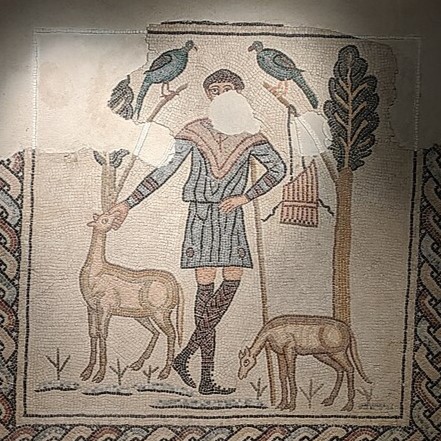
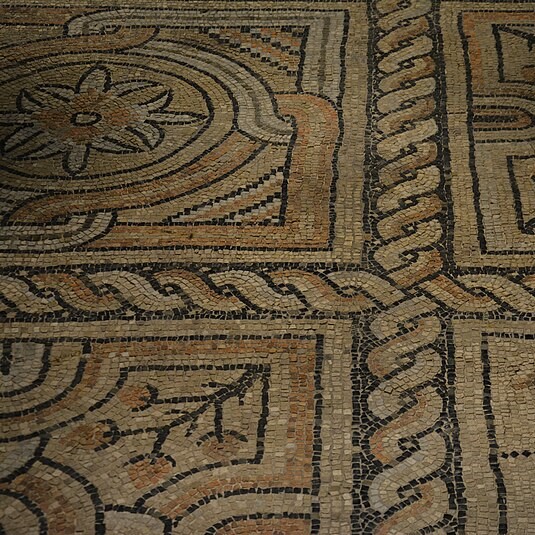
The name “House of the Stone Carpets” refers to the extraordinary refinement of the mosaics, which resemble actual “carpets” made of limestone, marble, and colored glass paste tesserae. The geometric patterns appear in multiple rooms, featuring interlaces, Solomon’s knots, and vegetal motifs—vine shoots, acanthus leaves, garlands—reflecting late-antique aesthetics.
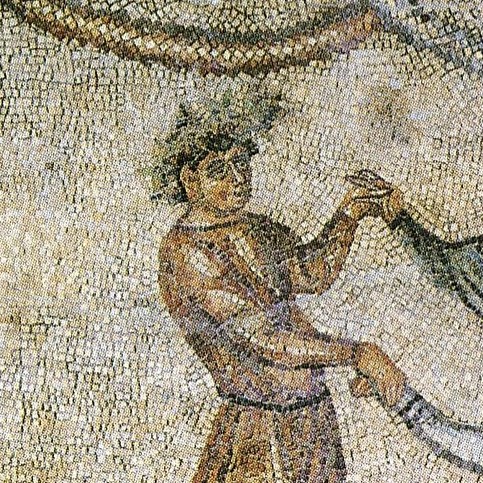
Among the most famous and captivating decorative elements stands the so-called “Dance of the Geniuses of the Seasons,” depicting figures dancing amid floral motifs and symbols relating to the cycle of the seasons.
At the time the House was built, Ravenna had transitioned from being the capital of the Western Roman Empire (from AD 402) to serving as the seat of the court of the Ostrogothic King Theoderic (from AD 493). This role as a political and cultural crossroads attracted artists and craftsmen from the Eastern Mediterranean, resulting in a distinctive artistic language suspended between Roman classicism and Eastern influences. It is precisely in this synthesis that the floors of the Domus dei Tappeti di Pietra find their original richness.
Please contact me to arrange your private tour of Ravenna.